My New Zealand Edmonds Cookery book is iconic. It’s the biggest selling cookbook in New Zealand’s history and if you are a Baby Boomer as I am and live in New Zealand, then you will know all about it.
It’s sat in my recipe book cupboard in my kitchen for the best part of 40 years. It’s coated in flour and some of the pages are ripped but the one page that isn’t, is the page with Banana Loaf on it.
These days I adapt many of the old recipes to better suit my post-menopausal health and exercise needs.
I substitute the sugar and white flour which are in most of the baking recipes in this cookbook and use an organic sweetener, such as apple juice concentrate or maple syrup and I now use a mix of organic stoneground flour and organic almond flour – it adds more protein to the loaf!
The Banana Loaf recipe is one I’ve adapted to also suit the needs of women in menopause and post-menopause you are regular exercisers. I have a recipe in all of the MyMT recipe books for women on my programmes.
The key to the success of the loaf recipe is having ripe bananas that are turning brown. When I saw three of these in my fruit bowl the other day and because I have a house full of skiers at the moment who are training and competing here in the New Zealand winter, I knew I had to make my (adapted) banana loaf for both myself and them!
Sports Nutrition is an important dimension for midlife women who are regular exercisers.
One of my teachings in the MyMT™ programmes and Practitioner Education programmes, is that never before have so many women been entering menopause and post-menopause within the context of their sports and fitness participation.
And this is an important consideration.
No matter how much working-out women are doing, the muscles and joints are ageing and changing. This includes changes to the size and function of muscle fibres, especially the sarcoplasmic reticulum.
The sarcoplasmic reticulum (SR) plays a vital role in muscle contraction and relaxation by regulating calcium ion (Ca2+) levels within muscle cells. It acts as a storage and release site for calcium, essential for initiating and controlling muscle movements.
As women move through menopause, the sarcoplasmic reticulum is changing, which means that calcium regulation is also changing. In women doing too much heavy exercise, such as resistance training, these age-related changes, means that muscles take longer to recover.
No matter your choice of sport or exercise, any heavy exertion induces transient inflammation and oxidative stress, along with wide-ranging changes in the immune system.
If calcium regulation is out of balance with the needs of the working muscles, then women may experience muscle fatigue effects after their workouts.
This includes aching muscles and even muscle weakness and for some, restless leg syndrome.
This where sports nutrition comes into the equation for post-workout recovery and it’s not all about protein! Calcium and potassium as well as healthy carbohydrates are essential for workout recovery.
Nutrition and physical activity are the two main modifiable factors that determine health and well-being as women get older and move into their post-menopause years.
Which is why, it’s important to have a focus on post-exercise recovery nutrition and the evidenced role of bananas and almonds in fatigue management after working out.
Bananas offer a unique mixture of carbohydrates, nutrients, and antioxidants that provide good nutrition support during prolonged and intensive exercise.
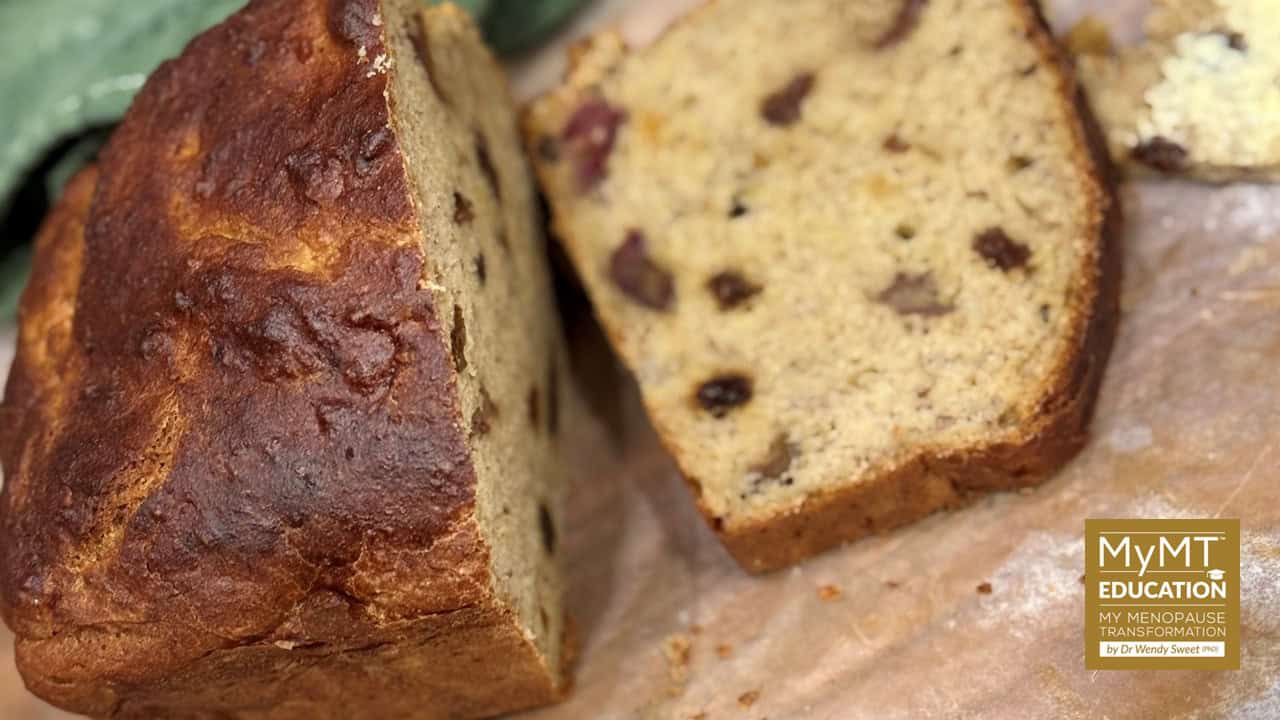
Which is why I have adapted this delicious and nutritious Banana loaf recipe for you, taken from my old Edmonds cookbook. I’ve removed the white sugar and replaced some of this with an organic apple sweetener, and I’ve used organic stoneground flour (unbleached) and almond flour, rather than bleached, white flour.
I hope you can make it sometime and add this goodness to your post-exercise recovery nutrition.
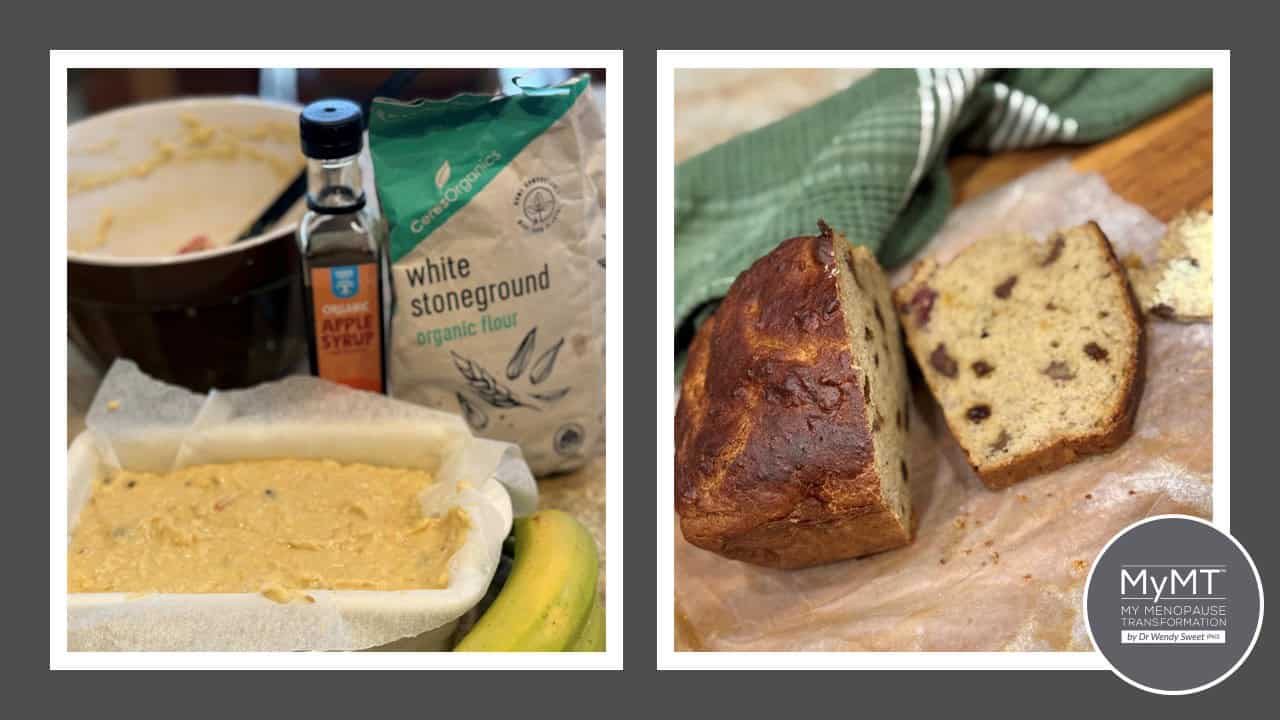
Fueling Post-Exercise Recovery with a Banana and Almond Loaf
Ingredients:
- 3 ripened bananas mashed
- 2 eggs
- 2 tablespoons of organic apple juice (or maple syrup)
- 1 cup of organic stoneground flour
- 3/4 cup of organic almond flour
- 75 gms of butter (melted)
- ¼ teaspoon of salt
- ¼ cup of milk
- ¼ teaspoon of baking powder
- ¼ teaspoon of baking soda (mixed in about 50mls of heated milk)
- ½ cup of organic raisins
- Optional – 1/2 cup of chopped walnuts.
Method:
Turn on the oven to bake at 180 degrees Celsius (356°F). Line a loaf tin with baking paper (I always rub a small amount of olive oil on the tin first for easier removal).
Beat the eggs and stir in the milk and melted butter. Mash the bananas and add these to the wet-mix, along with the concentrated apple juice or maple syrup – whichever you prefer for a sweetener.
Slowly add in the almond flour, salt and baking powder. Heat a small amount of milk (around 50 mls) in the microwave for 20 seconds and add the baking soda to this and then add this to the bowl with all the other ingredients, including the raisins. What this does is to ensure that the baking soda is dissolved well before adding it to the mixture.
The consistency that you want is a medium, so not too thick and sticky and not runny! If it’s too runny, then just add a bit more almond flour, or if it’s too thick, I also add in a tablespoon of extra virgin olive oil – you decide! If it’s not sweet enough for you, then just add some more apple concentrate or maple syrup to your taste.
Bake in the oven for around 45 minutes, or until you know it’s baked inside, by inserting a small knife or skewer, which comes out clean.
Leave in the tin for 5- 10 minutes before turning out onto a wire rack or wooden board. I cover it with a tea-towel and use a serrated knife to slice it and have it with grass-fed butter or peanut or almond butter – or just eat it as is!
Enjoy fueling your recovery!