Healthy Ageing Benefits of Cold Water Swimming
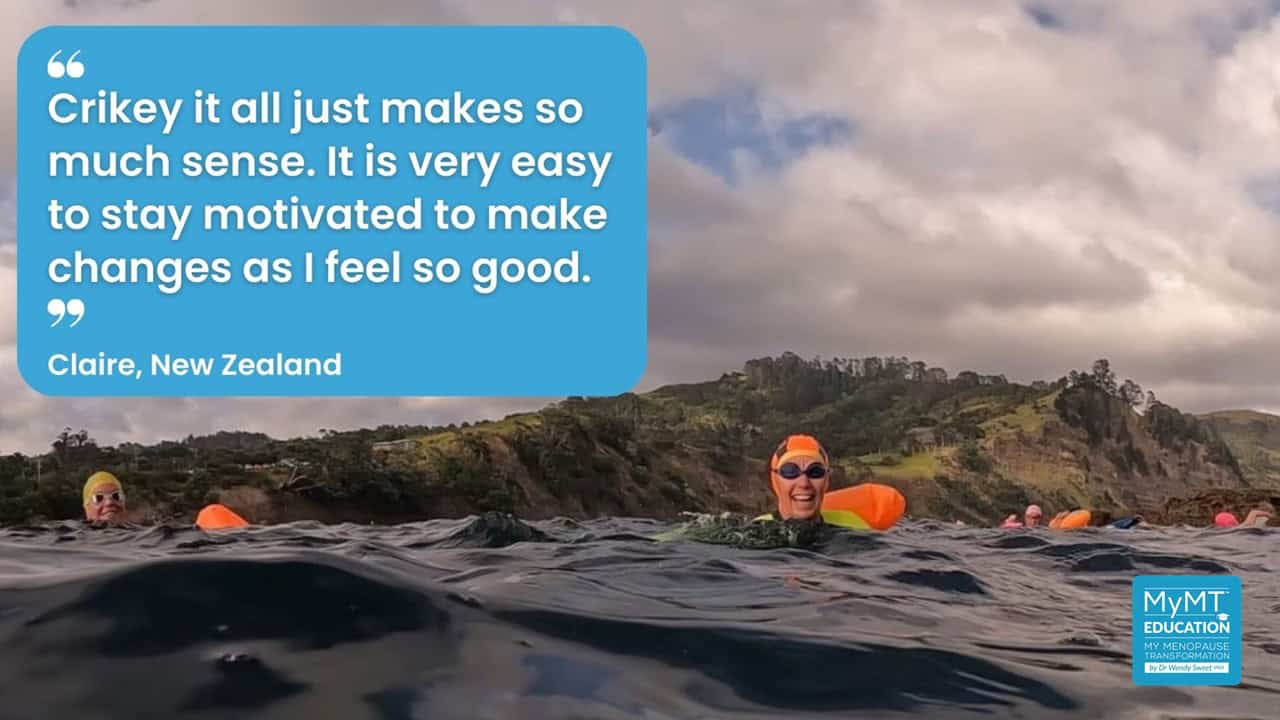
It’s only been quite recently that an event in a small New Zealand South Island town, has attracted swimmers from 16 to 66 years, to bravely swim length after length in an outdoor pool.
If you think that this is not an unusual phenomenon, then let me explain … the water temperature in the pool met the International Ice Swimming Association (IISA) regulation of being 5°C or lower. At the time, it was New Zealand’s very first ‘ice-swim’.
As I was watching the event on the evening news from my very warm perch on my couch, I realised that I knew one of the swimmers. She is in her late 50s and a very experienced long-distance swimmer.
As I saw her rush into the changing-rooms, I thought to myself, “I would love to know what her core temperature and blood pressure are right now and I bet, she isn’t experiencing any hot flushes.”
Cold water swimming has emerged as an activity of interest for athletes and the general population and has a long tradition in Northern Hemisphere countries.
Whilst there are obvious risks for people who are not acclimatised to the cold-water swimming, studies have shown that for midlife and older women, there may well be benefits to blood pressure and weight management as well as immune benefits.
In an extensive review of cold-water therapy for healthy ageing, Kunutsor and others, suggest that cold water therapy positively impacts cardiometabolic risk factors, stimulates brown adipose tissue and promotes energy expenditure, potentially reducing the risk of cardiometabolic diseases.
It also triggers the release of stress hormones, catecholamines and endorphins, enhancing alertness and elevating mood, which may alleviate mental health conditions. [Kunutsor et.al., 2025].
If your clients are swimmers, then this is an important activity to encourage them into as they move through menopause into post-menopause.
There’s a reason I’m saying this and it’s to do with the benefits of swimming in helping to manage blood pressure, liver health and lymphatic health as women move into post-menopause.
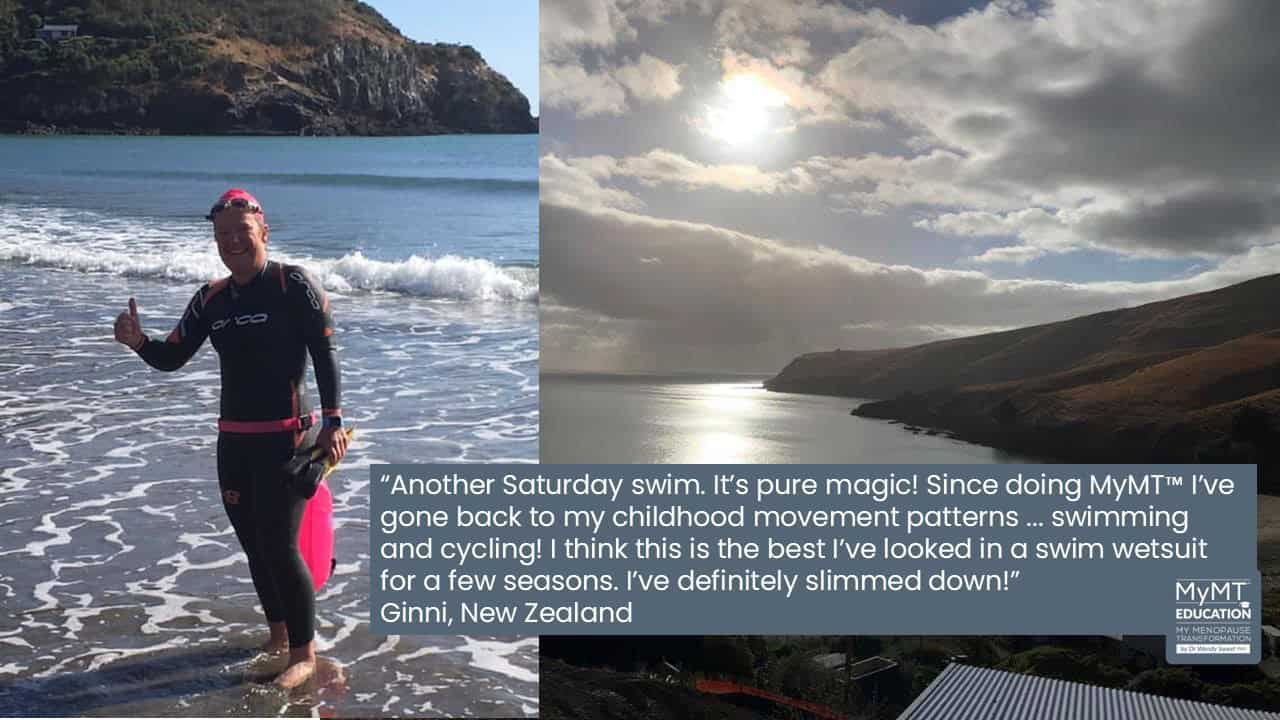
Swimming is a rhythmic, dynamic form of endurance exercise which involves large muscle groups. As I discovered myself, when my joints were sore and no amount of exercise was shifting the weight accumulating under my diaphragm, swimming offered a great alternative to land-based exercises, which for many women, leave them with sore muscles and tight joints
If your clients are good swimmers, then this activity also offers a way to lengthen the diaphragm and improve lymphatic drainage, helping to move toxins from fat cells into the lymphatic vasculature.
For years, swimming has been thrown into the mix with other forms of exercise.
Exercise recommendations regarding swimming for health have generally been generated from research on other modes of exercise such as walking or cycling – after-all, they fall into the category of ‘aerobic exercise’ that are recommended for prevention of heart disease. However, the problem with swimming is that it hasn’t really been researched independently of the other aerobic exercise modalities.
Which is why I like human studies that explore swimming on its own. It’s low-impact, low-cost and in most countries, reasonably accessible.
Whilst it does require some co-ordination and skill in order to achieve an intensity that improves cardiac health, even if your clients aren’t experienced swimmers, there are other benefits, including helping to improve joint health and mobility.
For those women who also have stiff and sore joints, then encouraging them to get into swimming helps to reduce compressive forces on muscles and joints compared to other forms of exercise.
However, the benefits from swimming for menopausal and post-menopausal women lies with the reduction of blood pressure.
High blood pressure (hypertension) poses a major health risk to women as they age. To date, most studies have focused on cycling and walking and less on swimming.
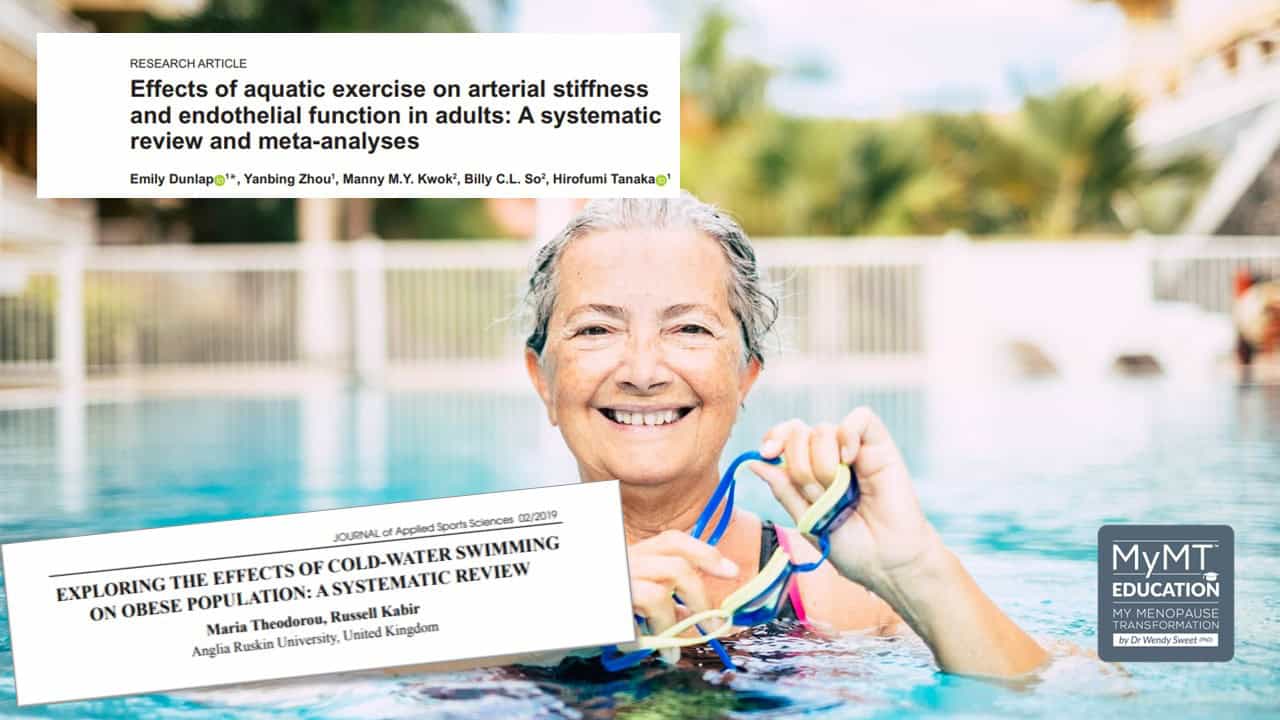
So, the news that regular swimming confers cardiac health benefits, including an increase in ‘good’ HDL cholesterol in post-menopause women is important (Tanaka, 2019). Furthermore, more recent research suggests that swimming at moderate intensity for 50 minutes, 3 times a week, improves systemic and peripheral arterial stiffness as well as endothelial function. [Dunlap et. al., 2025]
This is an important consideration for Health Coaches and Practitioners interested in supporting evidenced lifestyle changes for cardiovascular health in women.
Cooler Temperatures Boost Metabolically Active Brown Fat
Even better, if your clients can swim in cooler water, then it seems that goose-bumps are now a good thing for temperature regulation in menopausal women.
I don’t mean hypothermia (the dangerous drop in core temperature that can leave you unconscious), but I do mean trying to lower the temperature to beat the heat and activate what researchers understand as ‘brown fat thermo-genesis’.
They found that exercising outside in the cold and lowering the core temperature by only 1-2 degrees, stimulates the growth of healthy brown fat. This type of fat is metabolically active because it is rich in mitochondria.
I talk about brown fat and mitochondrial health in the Certified Menopause Weight Loss Coach Course and how to help women move their white fat towards brown fat, for greater weight control.
The more mitochondria women have, the greater their energy levels and the more fat-burning. Mitochondria are changing as women move through menopause, and longevity researchers also know that mitochondrial health is important for improved health as we age.
The number and size of mitochondria-rich brown fat decreases with age. As women move through menopause it mingles with white fat and spreads out around the abdomen as well as the heart. The only way to determine the ratio of brown fat to white fat is to have this measured by a physiologist or have an MRI or similar, so your clients may never know what their ratio’s are.
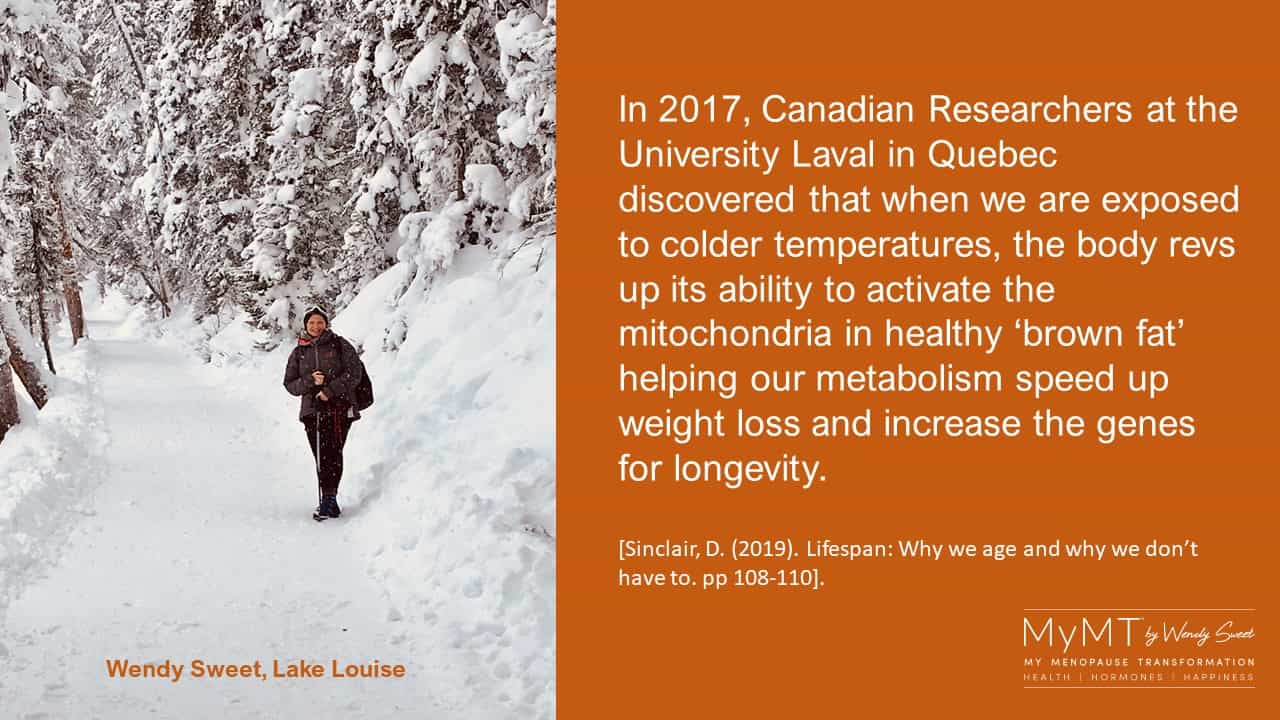
Researchers from a Quebec University now better understand that we can stimulate more brown fat mitochondria by being out in the cold and exercising in the cold as well. This includes swimming too.
Shivering Increases Conversion of White Fat to Brown Fat
Shivering is the body’s attempt to produce heat. As such, higher oxygen consumption is required. Because of this, heart rate is increased making the heart work faster to provide the body with oxygen.
This results in not only stimulating healthy brown fat production, but increases metabolic rate during rest afterwards. This is important for weight loss, because as women move through menopause, the decline in muscle density, contributes to declining metabolic rate too.
If your clients have a sedentary job and struggles to exercise regularly because of their exhaustion and sore joints, then their metabolism can down-shift faster too. That’s why swimming is good for them [Theodorou & Kabir, 2019].
Of course knowing what to do to also help your clients to turn around their sore joints and improve their active ageing, can also be found in the Practitioner Menopause and Joint Health mini-course.
I hope you can join me on this important course sometime too. The video is below.
References:
Costello L, McDermott ML, Patel P, Dare J. ‘A lot better than medicine’ – Self-organised ocean swimming groups as facilitators for healthy ageing. Health Place. 2019 Nov;60:102212. doi: 10.1016/j.healthplace.2019.102212. Epub 2019 Oct 12. PMID: 31610442.
Dunlap E, Zhou Y, Kwok MM, So BC, Tanaka H (2025) Effects of aquatic exercise on arterial stiffness and endothelial function in adults: A systematic review and meta-analyses. PLoS One 20(12): e0338929. https://doi.org/10.1371/journal.pone.0338929
Honda T, Kamioka H. Curative and health enhancement effects of aquatic exercise: evidence based on interventional studies. (2012). Open Access J Sports Med. 29;3:27-34. doi: 10.2147/OAJSM.S30429.
Knechtle B, Waśkiewicz Z, Sousa CV, Hill L, Nikolaidis PT. (2020). Cold Water Swimming-Benefits and Risks: A Narrative Review. Int J Environ Res Public Health. 2;17(23):8984. doi: 10.3390/ijerph17238984.
Kunutsor SK, Lehoczki A, Laukkanen JA. The untapped potential of cold water therapy as part of a lifestyle intervention for promoting healthy aging. Geroscience. 2025 Feb;47(1):387-407. doi: 10.1007/s11357-024-01295-w. Epub 2024 Jul 30. PMID: 39078461; PMCID: PMC11872954.
Maccarone MC, Venturini E, Menegatti E, Gianesini S, Masiero S. Water-based exercise for upper and lower limb lymphedema treatment. J Vasc Surg Venous Lymphat Disord. 2023 Jan;11(1):201-209. doi: 10.1016/j.jvsv.2022.08.002. Epub 2022 Aug 20. PMID: 35995327.
Nualnim N., Parkhurst, K. et al. (2012). Effects of Swimming Training on Blood Pressure and Vascular Function in Adults >50 Years of Age. Am J Cardiol. 109: 1005–1010
Tanaka H. (2009). Swimming exercise: impact of aquatic exercise on cardiovascular health. Sports Med., 39(5):377-87. doi: 10.2165/00007256-200939050-00004. PMID: 19402742.
Theodorou, M. & Kabir, R. (2019). Exploring the effects of cold-water swimming on an obese population: A systematic review. Journal of Applied Sports Sciences, Vol. 2, pp. 3-21
Related Tag: Losing Weight Menopause