
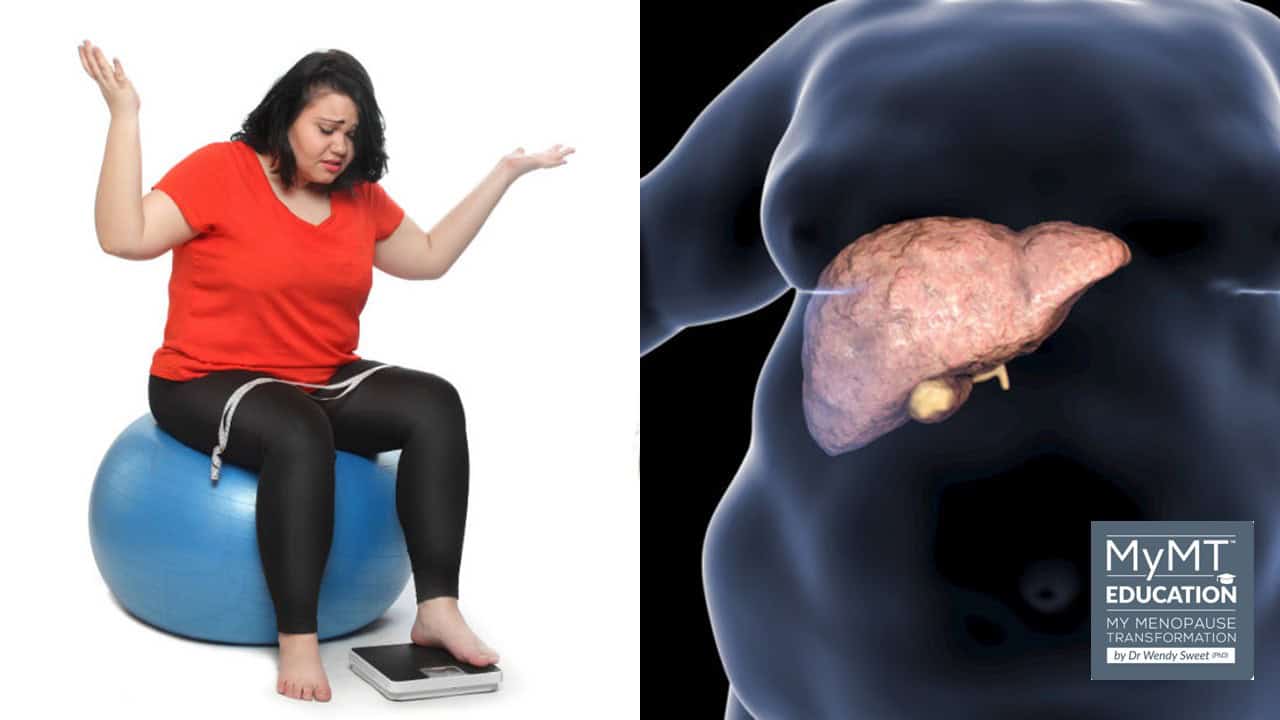
There is very little mention of the health of the liver in exercise and sports science studies in female athletes. I know this because for many years I lectured to students on exercise and sports physiology.
My attention turned to this subject as more and more runners, exercise instructors, body-builders and sports and fitness enthusiasts, joined my 12 week menopause weight loss programme over the past decade, concerned about why they were putting on weight as they moved through menopause.
I know exactly how they felt, as I was the same.
Despite significant attention to the marketing of primarily doing resistance training exercise during the midlife menopause transition, which very rightly is targeted towards bone density improvements, my exercise science curiosity lay elsewhere … that of better understanding liver health in overweight women during menopause.
Over 80% of the 500,000 women who have completed the MyMT™ Symptoms Quiz report that weight gain in midlife is their main concern, especially around their diaphragm and stomach regions.
With similar health and weight concerns myself, and as I realised that a new generation of women, who are regular exercisers are moving through menopause, I really wanted to explore the type of exercise that helps their liver health and helps them to turn around a known condition of Type 2 diabetes, called Non-Alcoholic Fatty Liver Disease [NAFLD].
We often forget that the modern lifestyles of women, especially decades of high-caloric intake and/ or too much or not enough physical activity, as well as high stress levels, impact the health of the liver.
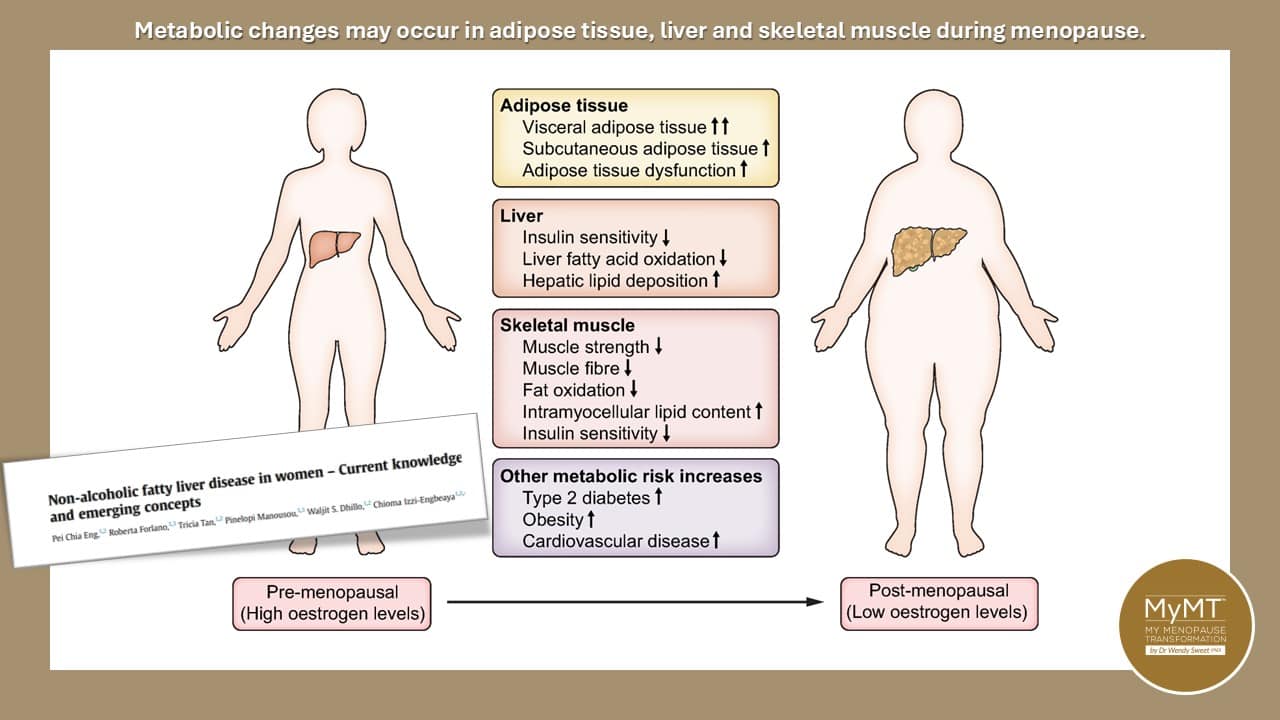
This is partly why the prevalence of non-alcoholic fatty liver disease (NAFLD), has become a significant health problem worldwide for women moving into their post-menopause years.
Liver regeneration only takes 4 to 10 weeks!
The liver is a remarkable organ, mentions researchers from the Centre for Regenerative Medicine in Edinburgh, Scotland, in a 2023 paper outlining the effects of hormones on liver health. The liver coordinates a multitude of critical functions, but fortunately for all of us, it retains the ability to remodel and regenerate damaged tissue. [Kasarinaite et al., 2023]
That is where both nutrition and exercise come into play, however, what we must remember, is that menopause impacts the liver health of women in more ways than we think and the consideration of their past exercise levels, as well as the current state of their liver, helps in ascertaining the best type of exercise for them, if they are overweight and/or exhausted.
This is why, when new research about the type of exercise that is best for women, came my way last week, I thought about those of you who have completed the certified MyMT™ Menopause Weight Loss Coach Course, or for those of you who are Exercise Specialists, and/or completed the MyMT™ Practitioner Course, (taking registrations for the September course now), might want to know about it.
The role of exercise in liver regeneration pathways in midlife and older women, is an important consideration for Coaches and Practitioners.
But what type of exercise is ‘best’ when we want to have a focus on the liver and turn around NAFLD, because according to a brand new systematic review, 4 weeks of the right exercise is all that women need to reduce the two main liver enzymes that may be high and be contributing to liver damage with age, along with higher low density lipoprotein cholesterol.
These two enzymes are:
- ALT – Alanine Aminotransferase
- AST – Aspartate Aminotransferase
High levels of ALT and AST, especially when they are anywhere between 1- 4 times the upper limit of normal, can indicate fatty liver disease. Which is why elevated liver enzymes are often the first indication of fatty liver disease in midlife women. Fortunately, many women get these checked as part of routine blood work as they move through menopause.
If women are experiencing worsening hot flushes and poor sleep, then these enzymes are important to better understand.
Afterall, there’s evidence suggesting a potential link between them as the menopause transition may cause changes in liver enzyme levels. Both ALT and AST tend to increase in early menopause, and while ALT may decrease later, AST levels often remain higher.
What can happen when the liver is fatty, is that these enzymes, normally contained within liver cells, leak into the bloodstream when the liver is damaged, signaling inflammation. While fatty liver disease is a common cause of elevated liver enzymes, other conditions can also cause this.
Obviously, NAFLD is a medical condition that requires intervention from medical specialists, but what about lifestyle support for our clients who are overweight?
How do we as Coaches support lifestyle solutions which assist liver regeneration pathways, especially those clients with NAFLD or Non-alcoholic Fatty Liver Disease?
What is NAFLD?
NAFLD is characterized by increased liver fat content in the liver cells (hepatocytes), with a threshold of > 5%. It is a condition that is associated with common metabolic disorders, such as overweight or obesity status, increased cardiovascular risk, insulin resistance and Type 2 diabetes.
But there are a handful of other symptoms that NAFLD has been associated with too, including sleep problems, osteoporosis, skin problems, hypothyroidism, and even polycystic ovarian syndrome.
With many of these conditions impacting the daily quality of life of midlife women in menopause, it makes sense to think about liver health and support.

What exercise is ‘best’?
Aerobic exercise plays a beneficial role in liver regeneration pathways by improving liver metabolic function as well as reducing oxidative stress and inflammation. But what many Practitioners and Coaches, and women themselves fail to understand, is that aerobic exercise enhances hepatocyte (liver cell) regeneration.
This type of exercise can also mitigate the decline in liver function and reduce the risk of liver diseases and according to a new systematic review of the evidence (Xue, Peng et al, 2025), aerobic training is the best mode of exercise to improve ALT and improve levels of the ‘good’ high-density lipoprotein cholesterol.
For improvements in AST however, twice a week of resistance training seems better. The researchers suggest that exercise methods have different effects on the main enzyme indicators of NAFLD. The results suggest that:
- Aerobic exercise is best to reduce some liver enzymes and at least 3-4 times a week for 50 minutes each time.
- Resistance training (moderate loads) is best for improving AST levels, and twice a week is best.
- Sustaining the exercise for 4-10 weeks has a better effect on liver improvements in NAFLD patients.
How does aerobic exercise improve liver health?
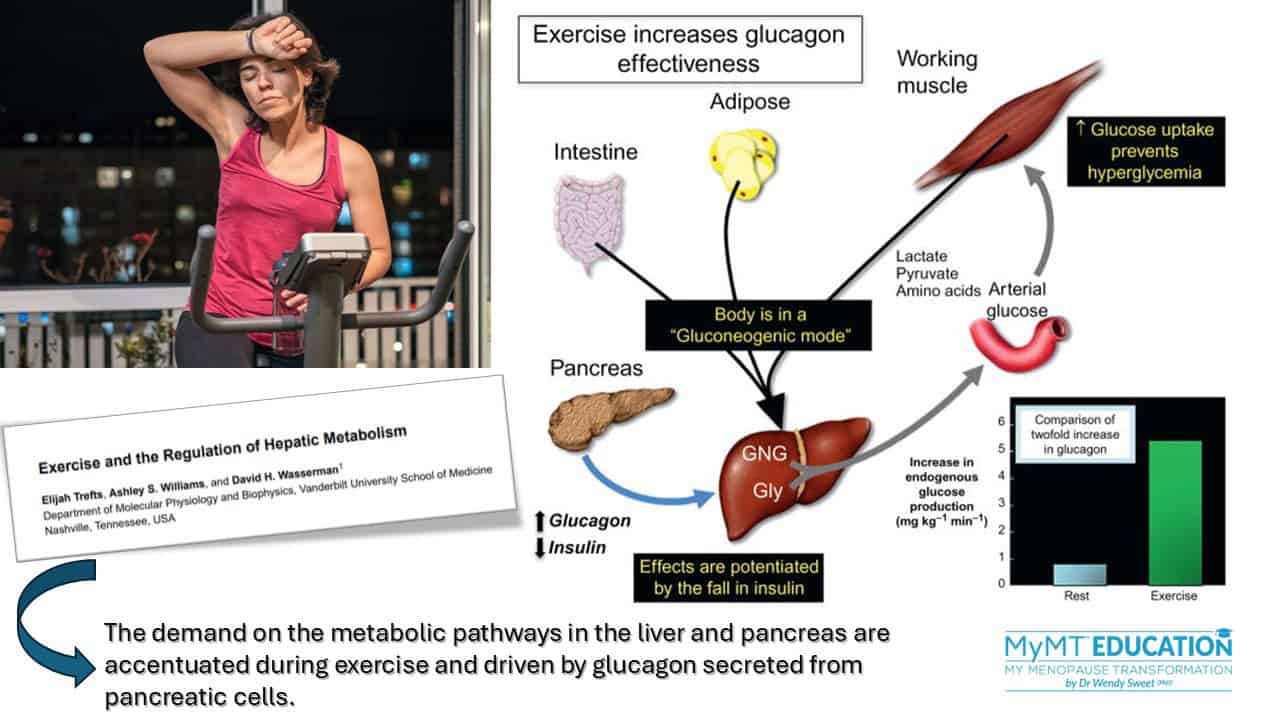
During aerobic exercise, the liver plays a crucial role in maintaining blood glucose levels. It does this by increasing glucose production through glycogenolysis and gluconeogenesis. As women exercise, their muscles simultaneously increase glucose uptake. This intricate interplay is primarily regulated by hormonal changes, particularly the insulin/glucagon ratio, and neural (nerve) signals.
Glucagon is a hormone that stimulates glucose production in the liver and the production of this increases during exercise, particularly prolonged exercise, or when blood glucose levels drop.
At the onset of exercise, insulin levels initially decline, then stabilize or slightly increase as exercise progresses. This decrease in insulin is crucial for allowing the liver to increase glucose output also allowing the muscles to draw glucose to them for continued energy production.
For those women who have had a lifetime of exercise, the liver’s ability to match hepatic glucose output to the body’s needs, especially during aerobic exercise, is critical for maintaining euglycemia (normal blood glucose levels).
But what many women like myself, who have undertaken a lot of exercise over many years, or have been over-training, fail to understand, is that they continual turnover of glucose in the liver, may itself be influencing NAFLD as they come through menopause.
Overtraining syndrome (OTS) can lead to liver inflammation, especially in midlife women who may be susceptible to hormonal and metabolic changes that exacerbate the effects of overtraining.
The inflammation can result from the body’s response to excessive exercise and insufficient recovery. Over time, this, along with not sleeping, has the potential to contribute to liver inflammation, weight gain and worsening fatigue.
I’ve seen this numerous times in those exercise instructors who have normalized their exercise output for years, and don’t know that now that they are in midlife and their menopause transition, their body may not be recovering very well.
Have your clients been overtraining?
Overtraining can lead to liver inflammation and disruptions in glycogen turnover. Studies indicate that excessive exercise can cause liver damage, including fat accumulation, inflammation, and fibrosis. Furthermore, overtraining can impact the body’s ability to regulate glycogen, potentially leading to fatigue and decreased exercise capacity.
During prolonged, exhaustive exercise, or high-intensity exercise, the liver is simply not able to keep up with the glucose demands. The stimulus to release glucose from the liver exceeds glucose utilization causing a rise in arterial glucose.
Then when glycogen stores become depleted in both muscle and the liver, we often see this as the athlete becoming hypoglycemic or they are ingesting glucose as their fuel supply during the event.
Are your clients highly stressed?
It’s not only over-training that creates increased demands on liver function. Chronic stress burns through glucose turnover in your liver. There is much literature now linking chronic stress with liver inflammation.
When women are busy, active and feeling stressed, there is a higher turn-over of glucose in the liver. This arises because the presence of stress hormones increases the body’s need for glucose.
If you have noticed your clients craving sugar all the time, then look at the amount of stress that they are under and this includes physical stress too. We forget that personal stress can cause women to do a lot of exercise and I’ve seen this for many years in the fitness industry. Therefore, this can cause a compensatory need for glucose and so, the demand on their brain, is for over-compensatory eating – they tend to crave more sugar and simple, low-nutrient carbohydrates!
This is why female exercisers and women who work in physically demanding jobs must remember that before, during and after exercise or when workloads are high, the liver has a lot of work to do.
The harder women exercise or the more stress that they experience daily, the more work the liver has to do to keep supplying the muscles and brain with energy. To achieve this, the liver is working harder than it should to help produce the chronic stress hormone called cortisol.
And when this happens, then precious progesterone is also used up, causing an imbalance between levels of oestrogen and progesterone, at a time of life, when both these hormones need to be in balance.
The effect for many women, is simply, worsening symptoms and/or weight gain.
This is why, for Practitioners and Coaches, it must be remembered that the liver is an organ that may have had considerable changes to its load and ‘stress’ over the years. This may affect the inflammation that builds up during the menopause transition – a time of life, when the liver is shrinking and losing volume as women move into post-menopause. (Brady, 2015).
I talk about these changes due to ageing in the MyMT™ Menopause Practitioner Course and hope that you can pre-register for this important lifestyle science course now, in readiness for my final intake of 2025 in September.

References
Adams, L. A., Roberts, S. K., Strasser, S. I., Mahady, S. E., Powell, E., Estes, C., Razavi, H., and George, J. (2020) Nonalcoholic fatty liver disease burden: Australia, 2019–2030. Journal of Gastroenterology and Hepatology, 35: 1628– 1635. https://doi.org/10.1111/jgh.15009.
Armeni E. et al. OR25-02. Presented at: ENDO annual meeting; June 1-4, 2024. Hot Flash Severity Predicts Metabolic-Associated Liver Disease.
Bansal R, Aggarwal N. Menopausal Hot Flashes: A Concise Review. J Midlife Health. 2019 Jan-Mar;10(1):6-13. doi: 10.4103/jmh.JMH_7_19. PMID: 31001050;
Brady, C. (2015). Liver disease and menopause. World J Gastroenterology, 21(25): 7613-7620.
Cabot, S. (2010). Fatty liver – You can reverse it. Arizona, USA: SCB Inc.
Gerber, L. H., Weinstein, A. A., Mehta, R., & Younossi, Z. M. (2019). Importance of fatigue and its measurement in chronic liver disease. World journal of gastroenterology, 25(28), 3669–3683.
Godoy-Matos AF, Silva Júnior WS, Valerio CM. NAFLD as a continuum: from obesity to metabolic syndrome and diabetes. Diabetol Metab Syndr. 2020 Jul 14;12:60. doi: 10.1186/s13098-020-00570-y. PMID: 32684985;
Matsui S, Yasui T, Kasai K, Keyama K, Kato T, Uemura H, Kuwahara A, Matsuzaki T, Irahara M. Changes of liver enzymes and triglyceride during the menopausal transition in Japanese women. J Obstet Gynaecol. 2016 Aug;36(6):806-811.
Qi F, Li T, Deng Q, Fan A. The impact of aerobic and anaerobic exercise interventions on the management and outcomes of non-alcoholic fatty liver disease. Physiol Res. 2024 Nov 12;73(5):671-686. doi: 10.33549/physiolres.935244.
Rui L. (2014). Energy metabolism in the liver. Compr Physiol. 4(1):177-97. doi: 10.1002/cphy.c130024. PMID: 24692138; PMCID: PMC4050641.
Satapathy SK, Sanyal AJ. Epidemiology and Natural History of Nonalcoholic Fatty Liver Disease. (2015). Semin Liver Dis. 35(3), 221-35. doi: 10.1055/s-0035-1562943.
Scheer, V., Tiller, N.B., Doutreleau, S. et al. Potential Long-Term Health Problems Associated with Ultra-Endurance Running: A Narrative Review. Sports Med 52, 725–740 (2022). https://doi.org/10.1007/s40279-021-01561-3
Stevanović J, Beleza J, Coxito P, Ascensão A, Magalhães J. Physical exercise and liver “fitness”: Role of mitochondrial function and epigenetics-related mechanisms in non-alcoholic fatty liver disease. Mol Metab. 2020 Feb;32:1-14. doi: 10.1016/j.molmet.2019.11.015. Epub 2019 Nov 29. PMID: 32029220
Trefts E, Williams AS, Wasserman DH. Exercise and the Regulation of Hepatic Metabolism. Prog Mol Biol Transl Sci. 2015;135:203-25. doi: 10.1016/bs.pmbts.2015.07.010. Epub 2015 Aug 5. PMID: 26477916.
Xue Y, Peng Y, Zhang L, Ba Y, Jin G, Liu G. Effect of different exercise modalities on nonalcoholic fatty liver disease: a systematic review and network meta-analysis. Sci Rep. 2024 Mar 14;14(1):6212. doi: 10.1038/s41598-024-51470-4. PMID: 38485714.