
Every time I read the newsletter from the Australasian Menopause Society, I read about various shortages of Menopause HRT. It seems to be an ongoing problem in many parts of the world as global demand exceeds production. Women on the MyMT programmes also feel this frustration as they are switched from one brand to another with various results.
This is when I remind them to go back to the MyMT™ Food Guide and find their recipes containing sweet potatoes – a low glycemic index carbohydrate, which is also known for its health and longevity benefits for women.
Nutrition evidence suggests that dietary factors influence the occurrence of menopause-related hot flushes/ flashes, [Barnard et al, 2021]. These factors include low glycemic index (Low GI) carbohydrate foods.
When we eat a meal containing carbohydrate, our blood glucose rises and falls. This is completely natural. However, with Diabetes, weight gain and other metabolic conditions on the rise in many Western populations, for many years, scientists and medical experts have been concerned about the extent to which blood glucose levels rise and remain high.
Blood glucose levels depend on two things:
- the amount of carbohydrate in a meal, and
- the nature (GI) of that carbohydrate.
Both are equally important as determinants of changes in blood glucose levels and as such, Harvard researchers have come up with the glycemic load (GL) which you may have heard about too.
Because hormonal changes during menopause and post-menopause are known to cause some problems to the regulation of glucose in the body (mainly because our muscles and liver are ageing and therefore, changing in their capacity to store and utilise glucose), numerous women may end up with higher blood glucose levels. [Tijirina et al, 2022] leading to worsening hot flushes.
Hence, having a focus on low glycemic index foods and the low glycemic load is an important lifestyle intervention for women during their menopause transition.
Both orange carrots and orange sweet potatoes contain carotenoids. Nutrition studies report that carotenoids demonstrate a variety of health benefits, including the prevention of age-related macular degeneration, cancer, cognitive decline, metabolic disorders, and skin ageing. Their role is also supported by their ability to reduce oxidative stress and inflammatory pathways in cells. (Shanaida et al. 2025).
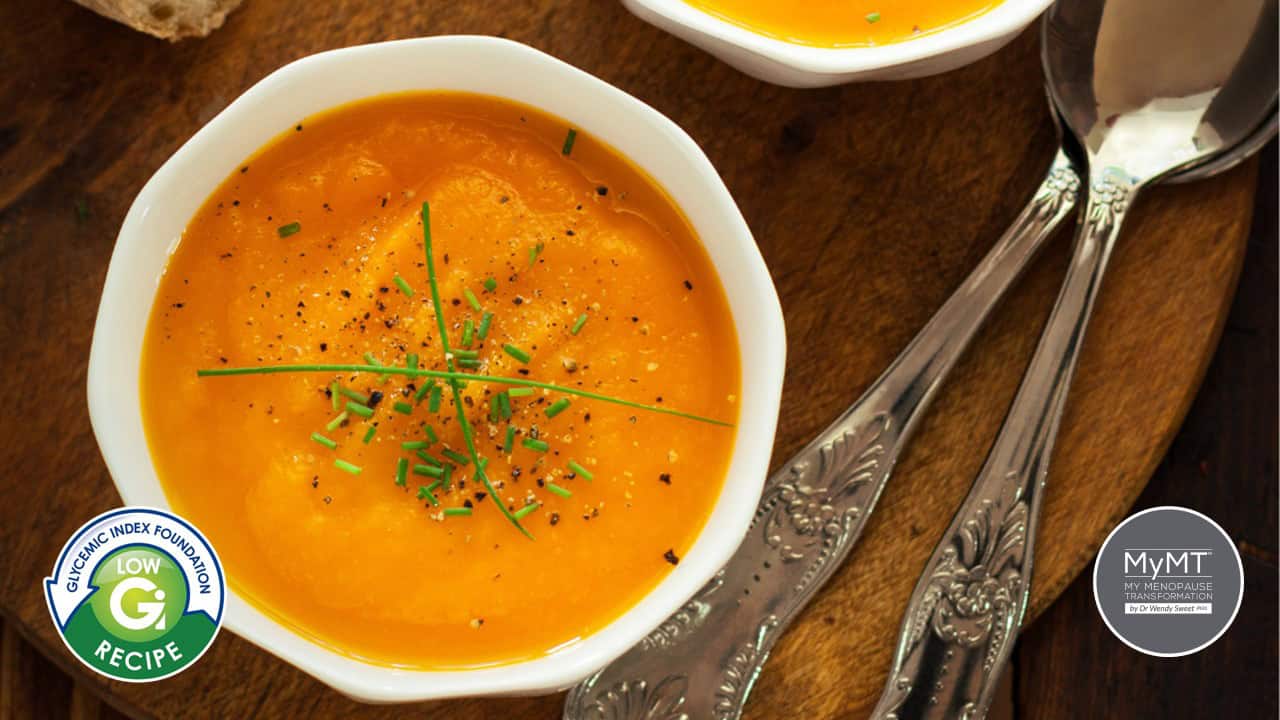
When this easy, peasy Roasted Carrot and Sweet Potato Soup recipe arrived in my inbox from the University of Sydney’s Low GI research unit recently, I thought it would be a great winter (or summer) soup for you to add to the MyMT™ Kitchen this week.

Ingredients:
Serves 4
This easy recipe takes 15 minutes to prep and 30 minutes to cook.
- 500 g carrots medium, peeled and chopped into small chunks
- 1 sweet potato medium, peeled and chopped into small chunks
- 1 tbsp extra virgin olive oil
- 2 cups reduced salt vegetable stock
- 1 cup orange juice freshly squeezed
- 1 tsp curry powder
- 1 tsp ginger chopped fresh ginger
- sea salt and ground black pepper
- fresh flat-leaf parsley or dill or chives to garnish
Method
- Preheat oven to 180C.
- Peel carrot and sweet potato and chop into small chunks. Place onto non-stick baking trays and drizzle with olive oil. Massage vegetables with olive oil to evenly coat. Add a twist of sea salt and black pepper.
- Roast vegetables for approximately 30 minutes or until soft.
- Place roasted vegetables in a blender. Add vegetable stock and orange juice and blend. Add curry powder and ginger and continue to blend until smooth. If soup is too thick, add a little extra water.
- Garnish with Greek yoghurt and chopped fresh parsley, dill or chives if desired.
Nutritional information (per serve)
Calories: 192kcal | Carbohydrates: 29.1g | Protein: 3.8g | Fat: 5g | Saturated Fat: 0.8g | Fibre: 8.8g

References:
Blekkenhorst LC, Sim M, Bondonno CP, Bondonno NP, Ward NC, Prince RL, Devine A, Lewis JR, Hodgson JM. Cardiovascular Health Benefits of Specific Vegetable Types: A Narrative Review. Nutrients. 2018 May 11;10(5):595. doi: 10.3390/nu10050595.
Brand-Miller J, Hayne S, Petocz P, Colagiuri S. Low-glycemic index diets in the management of diabetes: a meta-analysis of randomized controlled trials. Diabetes Care. 2003 Aug;26(8):2261-7.
Shanaida M, Mykhailenko O, Lysiuk R, Hudz N, Balwierz R, Shulhai A, Shapovalova N, Shanaida V, Bjørklund G. Carotenoids for Antiaging: Nutraceutical, Pharmaceutical, and Cosmeceutical Applications. Pharmaceuticals (Basel). 2025 Mar 13;18(3):403. doi: 10.3390/ph18030403.
Tijerina A, Barrera Y, Solis-Pérez E, Salas R, Jasso JL, López V, Ramírez E, Pastor R, Tur JA, Bouzas C. Nutritional Risk Factors Associated with Vasomotor Symptoms in Women Aged 40–65 Years. Nutrients. 2022; 14(13):2587.