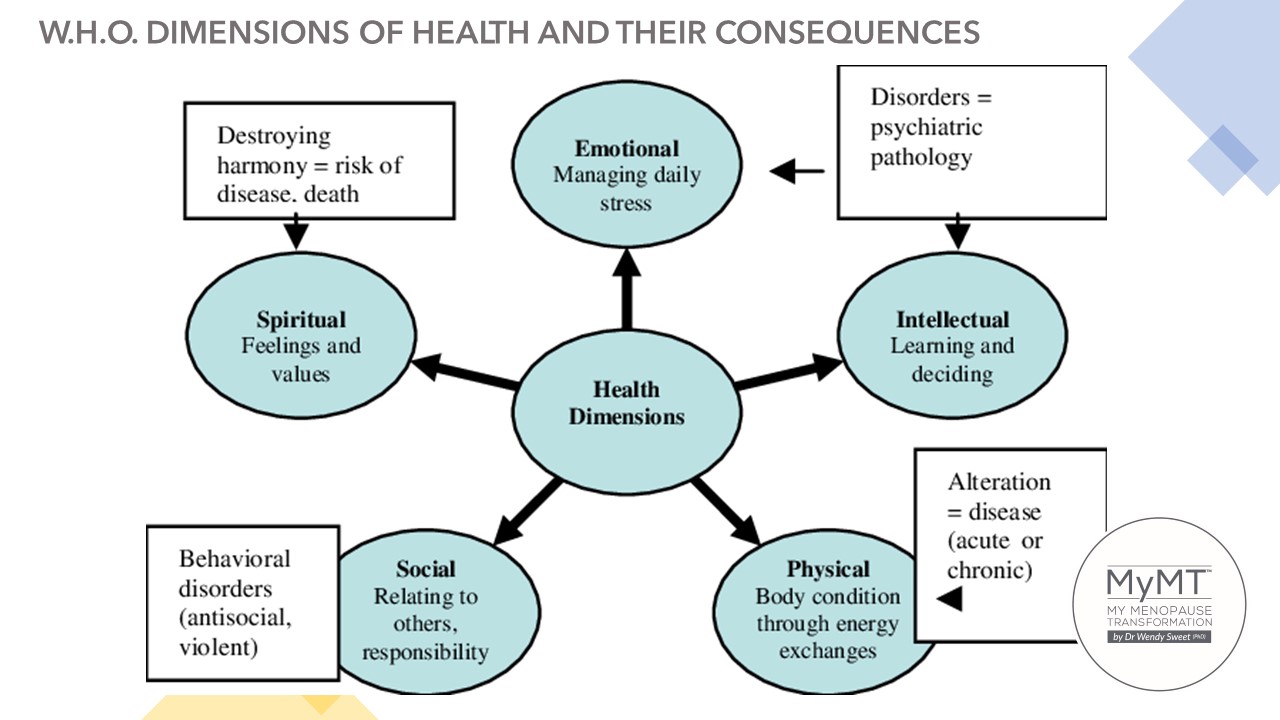
When I was lecturing in health and wellbeing at Waikato University many years ago, I used to show students the diagram below, which depicts the World Health Organisation’s (WHO) dimensions of health and the known consequences.
Like many women I’ve come across in my own coaching of the MyMT™ programmes, never once did I think it applied to me. I was a regular exerciser, I (supposedly) ate ‘well’, I was pretty motivated and I thought I was a good representative of being ‘healthy’.
But that was before menopause hit
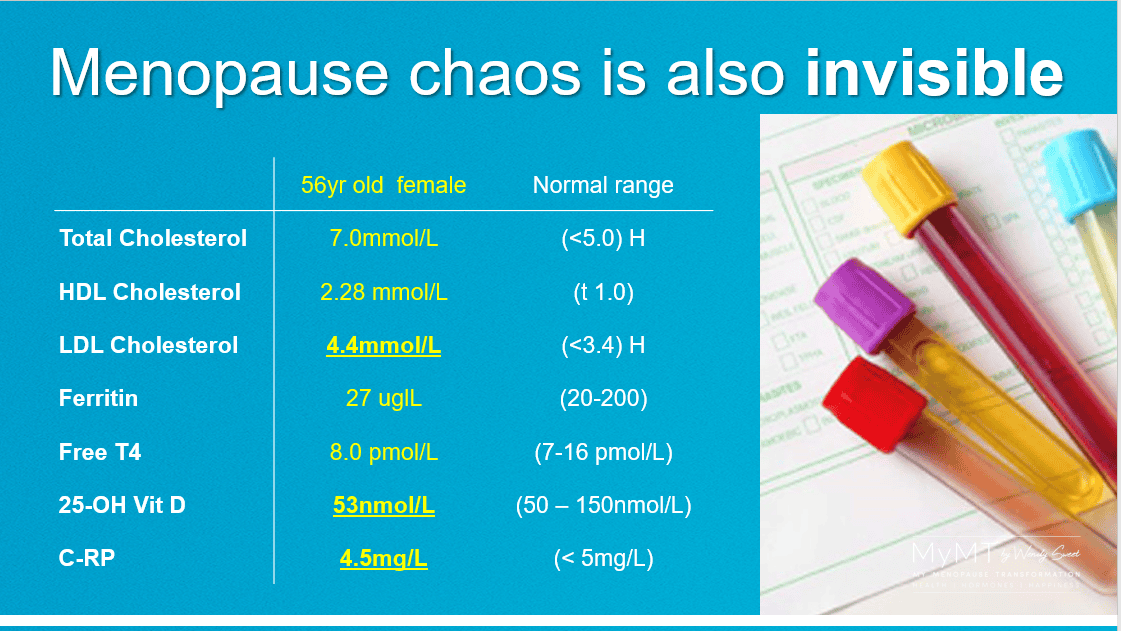
When I had my health-markers checked with my Doctor to determine what was really going on with how ‘unhealthy’ I was feeling, the results didn’t lie – high cholesterol, liver health changes (I didn’t drink alcohol) and the borderline hypertension was concerning – because I hadn’t had high blood pressure at all throughout my life.
My Doctor had no explanation, other than ‘it’s what I see in menopausal women all the time.’
With insomnia, exhaustion, weight gain, mood swings and joint health concerns distracting me on a daily basis, it was a confusing time.
The blood work was the ‘wake-up’ call that I needed – at the time my liver enzyme functions were high, Vitamin D and iron were low, cholesterol was high and goodness knows what my inflammatory marker (C-reactive Protein) was doing, because I didn’t know about that then and nor apparently, did my Doctor.
All I knew was that I couldn’t go on each day feeling the way I felt. Something had to change and the first ‘change’ I had to make, was asking myself, how on earth I had gotten to this point with my ‘health’?
My studies on women’s health and ageing led me out of the confusion, especially the W.H.O. Dimensions of Health.
You see, the women whom I was interviewing at the time, had all positioned their ‘healthy ageing’ in doing lots of vigorous exercise. But when I enquired how this was going for them, not one of them felt ‘healthy’.
They just trusted that their exercise specialists were giving them the correct information about the exercise and nutrition they should be following in their 50s, to move into their older years in the best health possible.
In a couple of weeks, it is World Menopause Day and the theme is heartening to me – it’s Lifestyle Medicine.
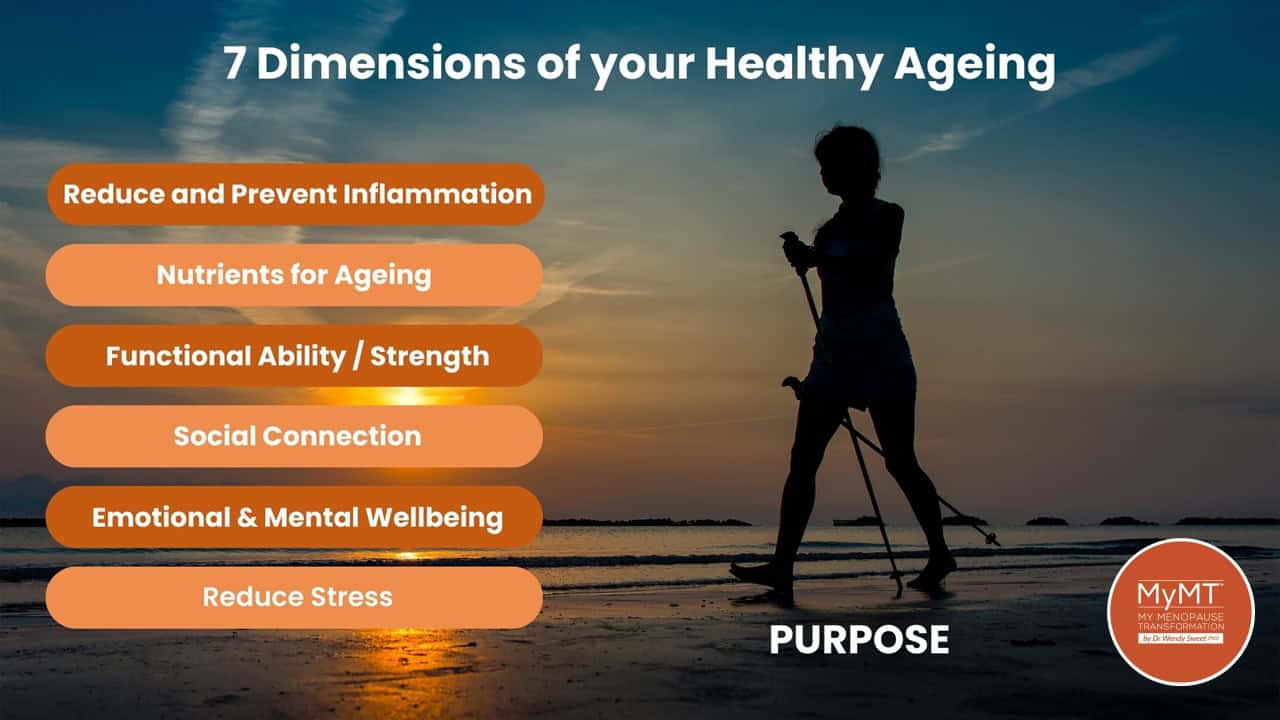
It’s a great reminder to consider your lifestyle as ‘medicine’! A great starting point for you is to understand the Dimensions of Health, which I have also positioned my Practitioners courses on, but specifically for the menopause transition.
I talk about the 7 dimensions in all of the MyMT™ programmes – Circuit Breaker/ Transform Me and my new Beyond Menopause programme.
Health-Disease models help to move people towards 'healthier behaviours'
Over the past few decades, health-behaviour researchers (mainly Psychologists) have tried to explain the health-disease relationship through various theories. Two main models exist today:
The Biomedical Model. This is based on the direct cause/effect relationship, which explains the occurrence of disease. Appropriate treatments can then able to be presented to patients. The Psycho-Behavioural Model. This is part of social-psychology learning, and incorporates the attitudes and values of individuals and how these influence health-related behaviours.
Both of these theories not only help Health Practitioners and Health Coaches to move people towards ‘healthier behaviours’ but also help us to reflect on the reasons behind our health actions each and every day.
Understanding the various dimensions of health enables us to examine ALL aspects of personal health, not just ‘fitness’ or ‘dieting’.
The W.H.O. define health as ‘not merely the absence of disease or infirmity, but a state of physical, mental and social wellbeing. The physical dimension also contributes to emotional, intellectual, social and spiritual dimensions.’
Therefore, in order to be considered “healthy,” it is imperative that none of these areas to be neglected.
Optimising all these determinants of health contributes to a state of balance and harmony both within ourselves and with the world around us.
If we are going to progress towards improved health, [within any medical or physical limitations you may have], then one of the main considerations is that we set about reflecting on how to can change some of our health behaviours and create new ones, whatever the environment that we are in, each day.
Health promotion is about putting your own health needs first. With over 20,000 women globally having undertaken my programmes, this is the ONE factor that many find the most difficult to do.
That’s why the focus in all of my programmes is one of SUPPORT. And it’s why, in each module or webinar, I not only teach you ‘what to change’, but also ‘how to change’ based on my 7 Dimensions of Women’s Healthy Ageing.
Good health starts from the 'inside-out'
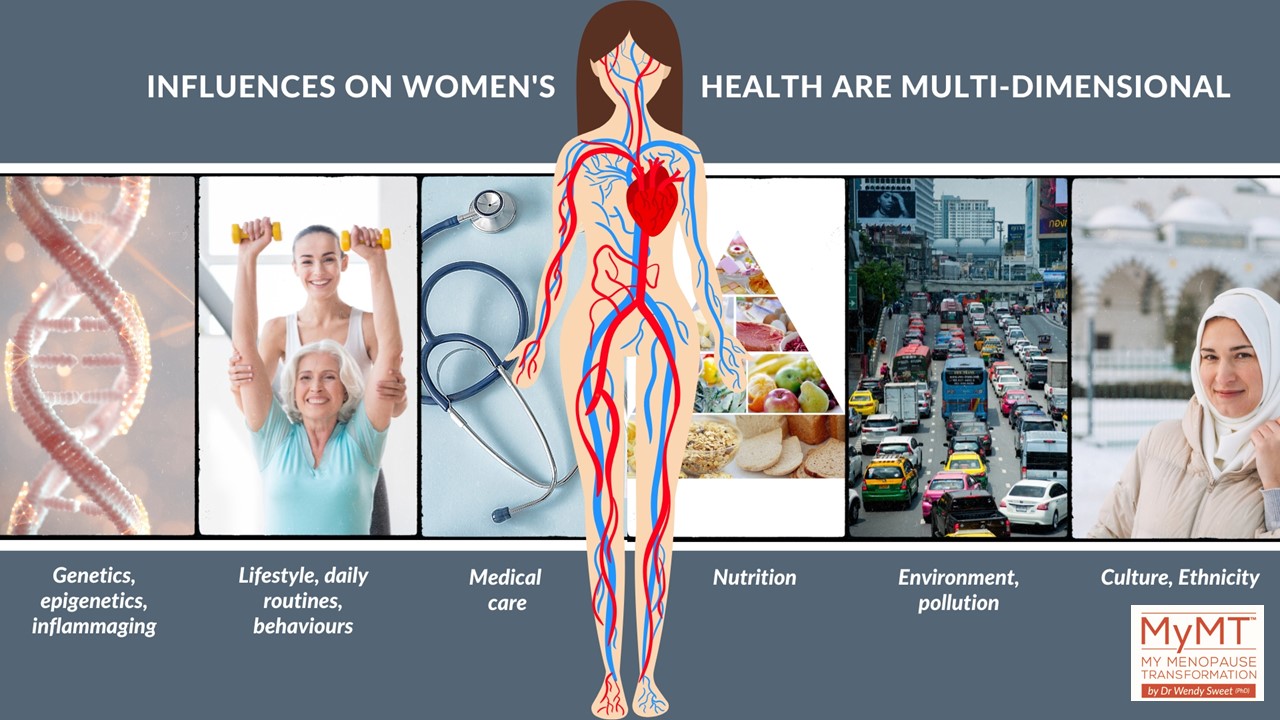
Just as menopause is primarily viewed as being ‘only’ about hot flushes, or seen in the medical paradigm as requiring ‘only’ pharmaceutical treatments, I often think about the 7 Dimensions of Healthy Ageing and wonder when and how, all of the dimensions of health are being accommodated for clients?
One of the messages in the 12-week programmes, is that good health starts from the inside-out (emotionally, spiritually and physically).
When we take this perspective and explore the various dimensions of health, there is so much more to health-behaviour change than ‘just food’ or ‘just exercise’.
It’s why, one of the strategies that we can focus on, is to reflect on what’s going on in our life each and every day (symptoms included) and frame this against the dimensions of our health.
This is a great way to moves towards identifying the routines and habits you want to and can, change.
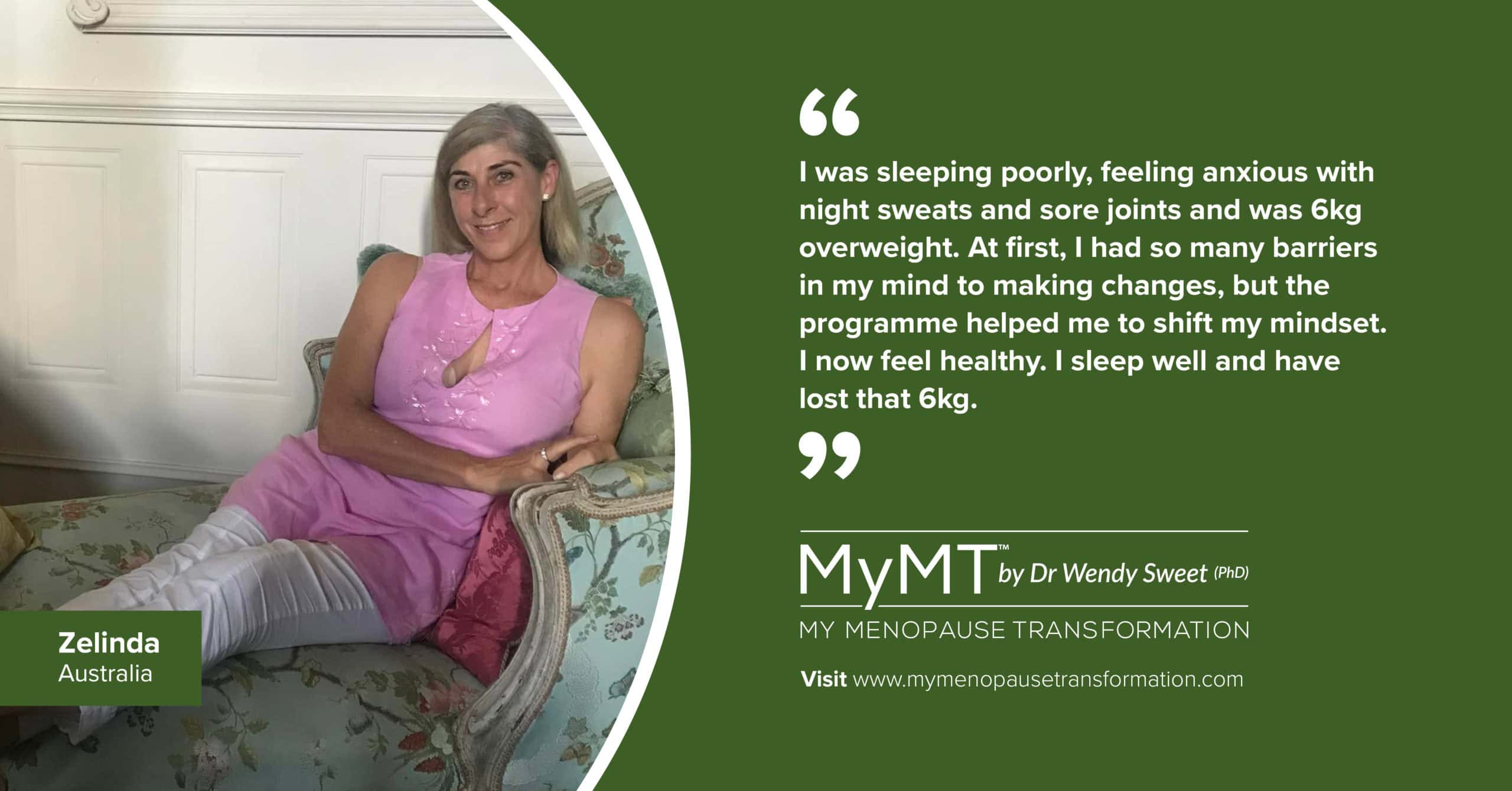
I had to do this, as did Zelinda from Australia. Her fascinating story is HERE for you.
3 health-behaviour change strategies to try
Re-imagining aspects of my own health and how to untangle these began with reflecting on ‘what isn’t working?’
Reflecting on this question is a great starting point to ask yourself. You will be surprised at how meaningful this simple question is.
As such, I stopped the exhausting high-intensity exercise that had followed me all my working life.
I also stopped listening to dietary advice that took a ‘one-size-fits-all’ approach and was primarily situated in fitness and muscle hypertrophy discourse, which was not evidenced for exhausted women, like myself, who weren’t sleeping and were putting on weight.
I also began to better manage my stress levels and put my Master’s research on health behaviour-change into action, as well as my doctoral studies.
One of my personal reflections was that I wasn’t following the scientific evidence on health, longevity, lifestyle medicine and women’s ageing.
That’s why, as part of the lead-up to World Menopause Day on October 8th, which has as its theme, Lifestyle Medicine, I want to share some practical things that you can achieve on your renewed health journey:
- Start from the inside out.
As I mentioned in my Masterclass on Menopause, menopause chaos is invisible. Therefore, talk to your Doctor to get your blood checked and get some baseline results. The ones I suggest that affect menopause symptoms and weight gain are: Vitamin D, Iron, Ferritin (stored iron), C-reactive Protein (an inflammatory marker), Liver Function, Cardiac Function and of course, Thyroid Function. I don’t worry too much about hormonal checks, as these only show if you are in menopause or not. Remember that if you are on HRT, you may also have a false reading about your true menopause status too.
- Consider the 7 dimensions of health criteria and decide which ones you need to commence with as a starting point.
For some of you, nutritional changes may be your starting point, compared to movement and exercise changes, or vice versa. For others, it might be that you want to begin with other aspects of your health, such as your joint or gut health or sleep, or your stress management. Try to go to that ‘self-reflection’ place that you may not have thought about for years. Only when we go-deeper into our true selves do we start to (re) discover our true self. Where is she and how has she been hidden over the years?
- Consider the 7 dimensions of health criteria and decide which ones you need to commence with as a starting point.
- Support is crucial to behaviour change for women.
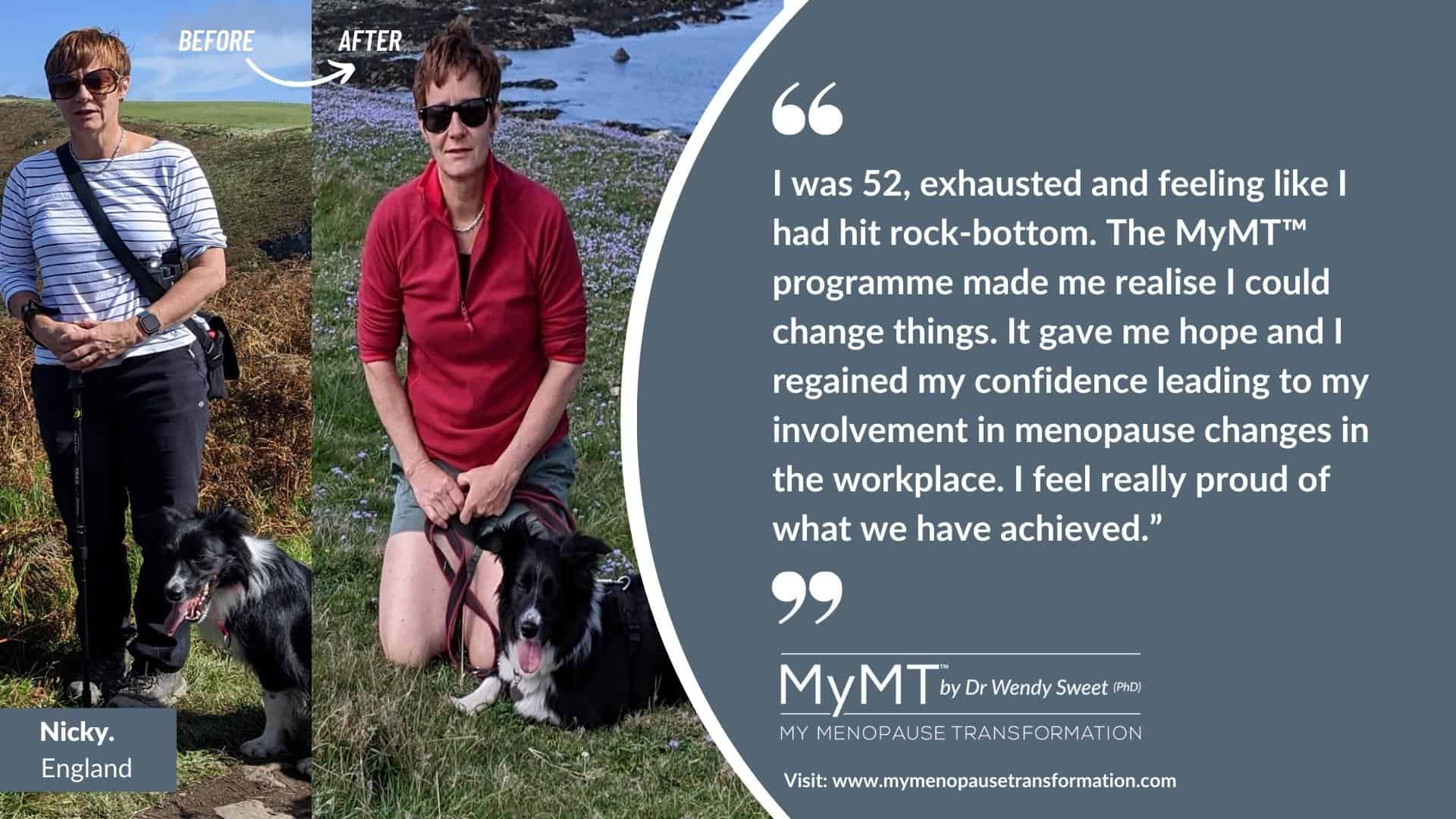
If you are looking to make some changes to your daily routines in order to improve your health, then do you have the correct support at home, in the workplace, with your friends/ relatives/ work colleagues etc.? I love how workplaces are opening up conversations on menopause. One of the UK ladies, who began with my own programme, but then went on to do Health Coach qualifications and evenutally became a Certified MyMT™ Practitioner, is Nicky (in the banner above). She was exhausted and was under a lot of stress in her role as a Senior Manager at her company and had lost a lot of confidence. We had numerous email discussions and I encouraged her to bring the conversation about menopause into her workplace. Doing this at the time, took her on a journey within her company to bring this topic to the attention of others. As she mentioned.
“I reached out to women in our leadership team to begin with and had a great response."
They invited me to join the Inclusion, Diversity and Belonging forums they hold to discuss setting up menopause workshops, but also to start to get some open conversations going. I have also been invited to join our “inspiring people ” steering committee, where new policies are discussed.”
It was a wonderful initiative from Nicky to achieve this.
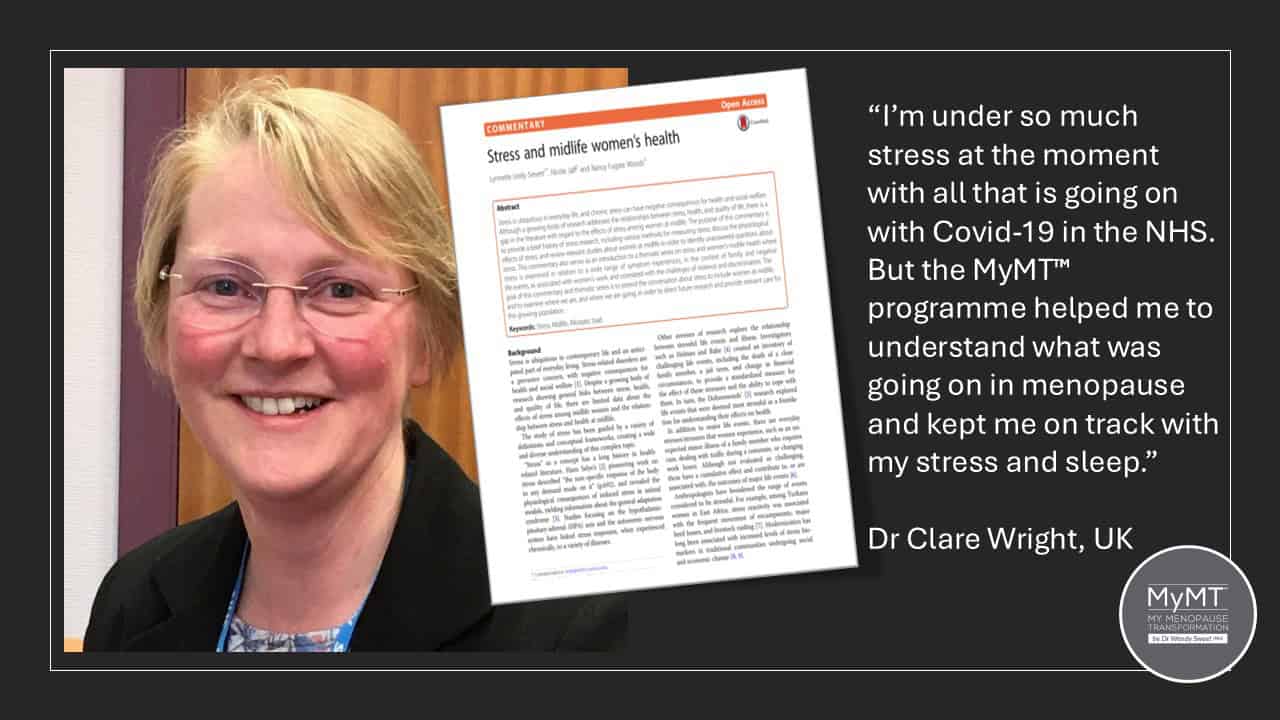
And then there is Clare from the UK. I came across Clare during the pandemic. Her role then was as a Clinical Psychologist with the NHS. She, more than anyone, understands the magnitude of stress in the workplace and the impact of this on menopause symptoms and, of course, confidence and wellbeing.
As she led the mental health team for the NHS, I’m so pleased that she joined me at the time and reflected on how and why she needed some support too.
As you think about the lifestyle changes that you would like to make as you think about your future years and your health, I wonder if you have the support that you need in order to help yourself. If not, then I invite you to explore any of the MyMT™ programmes and how they work.
These are available to learn more about on the website. It would be my privilege to be there alongside you.
Dr Wendy Sweet (PhD)/ MyMT™ Founder and Member: Australasian Society of Lifestyle Medicine.